Textile Summer Workshops 2026 – Textiles Meet Clay
This year, the Textile Summer is expanding its scope to include clay as a material in its own right: it is used to create sculpted objects.
For plant printing—known as “Ecoprint”—Esther Grischott heats up an old, wood-fired wash tub. Christine Flaig also works with the element of fire: during barrel firing, the objects—previously shaped from clay—take on the characteristic color nuances and surface textures that define this archaic firing process.
Earth, in turn, plays a central role in bogolan. Using clay brought specially from Mali, Stini Arn introduces participants to this traditional fabric-dyeing technique and demonstrates how natural materials create color and patterns on the fabric.
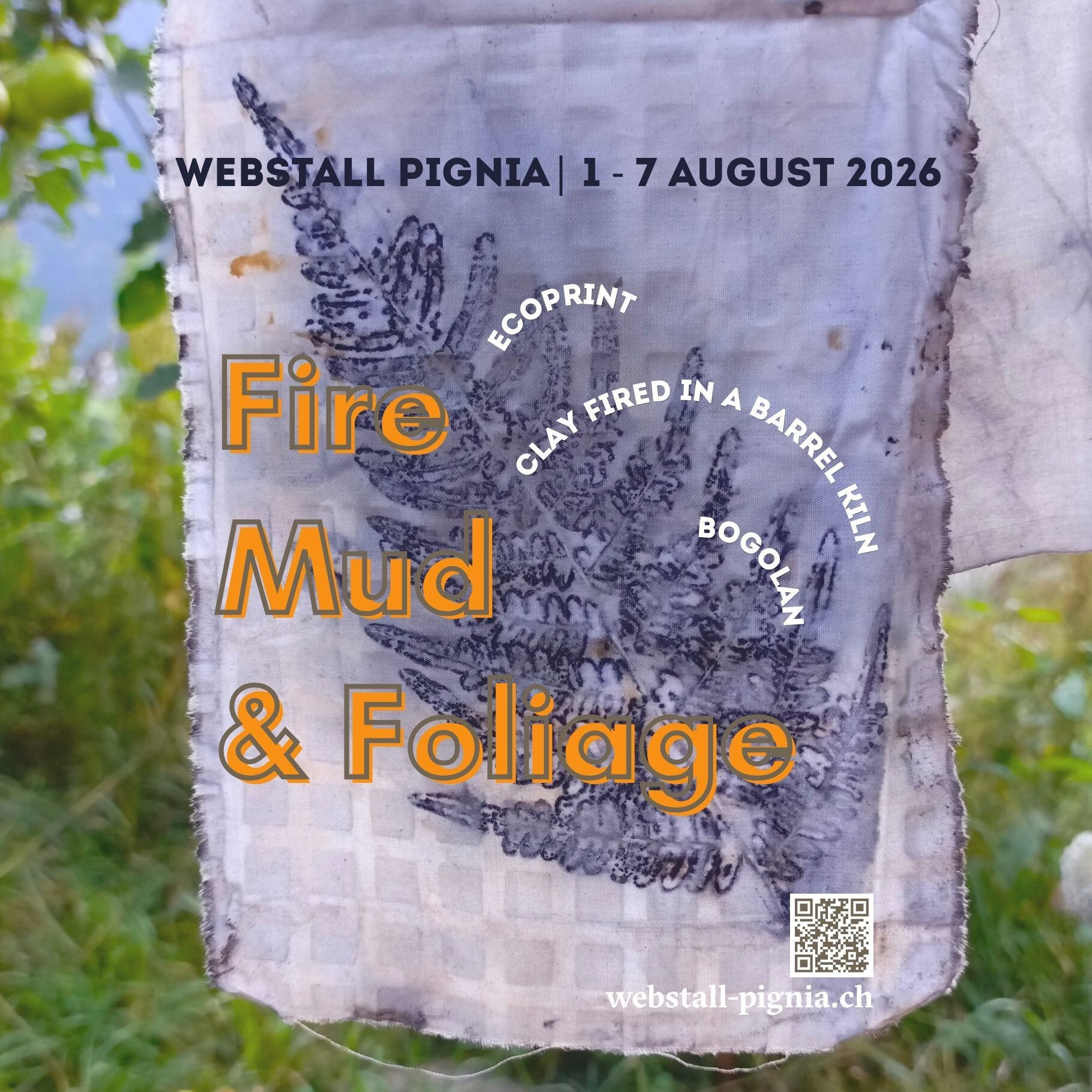
Ecoprint
Esther Grischott will fire up the large “Dirty Pot”—an old, wood-fired wash tub. Ecoprint is a form of botanical printing or contact dyeing. In this process, the natural dyes from leaves, flowers, and other plant parts are transferred directly onto fabric or paper using steam and heat.
Clay Fired in a Barrel Kiln
After exhibiting her Raku creations at the Webstall Boutique for the first time last year, Christine Flaig is now offering this exciting workshop.
Participants will have the opportunity to experiment with different types of clay and create small to medium-sized objects. After a week, the pieces will be fired in a barrel kiln together with wood and other organic materials, producing unique and often surprising results.
Surprises guaranteed!
Bogolan
Stini Arn has once again brought back iron-rich clay from the Niger River in Mali, which is used to paint the fabric dyed with leaves (ngalaman).
Bogolan (also Bògòlanfini) is a traditional, handmade cotton fabric from Mali, West Africa, known as “mud cloth.” It is dyed using a special technique involving fermented mud and plant dyes, creating geometric patterns. The fabric is a symbol of Malian culture, often used for clothing and decoration.
Pignia Bogolan Experiment: in which we attempt to create a similar effect using local plants and mud with the addition of iron
Info + Registration
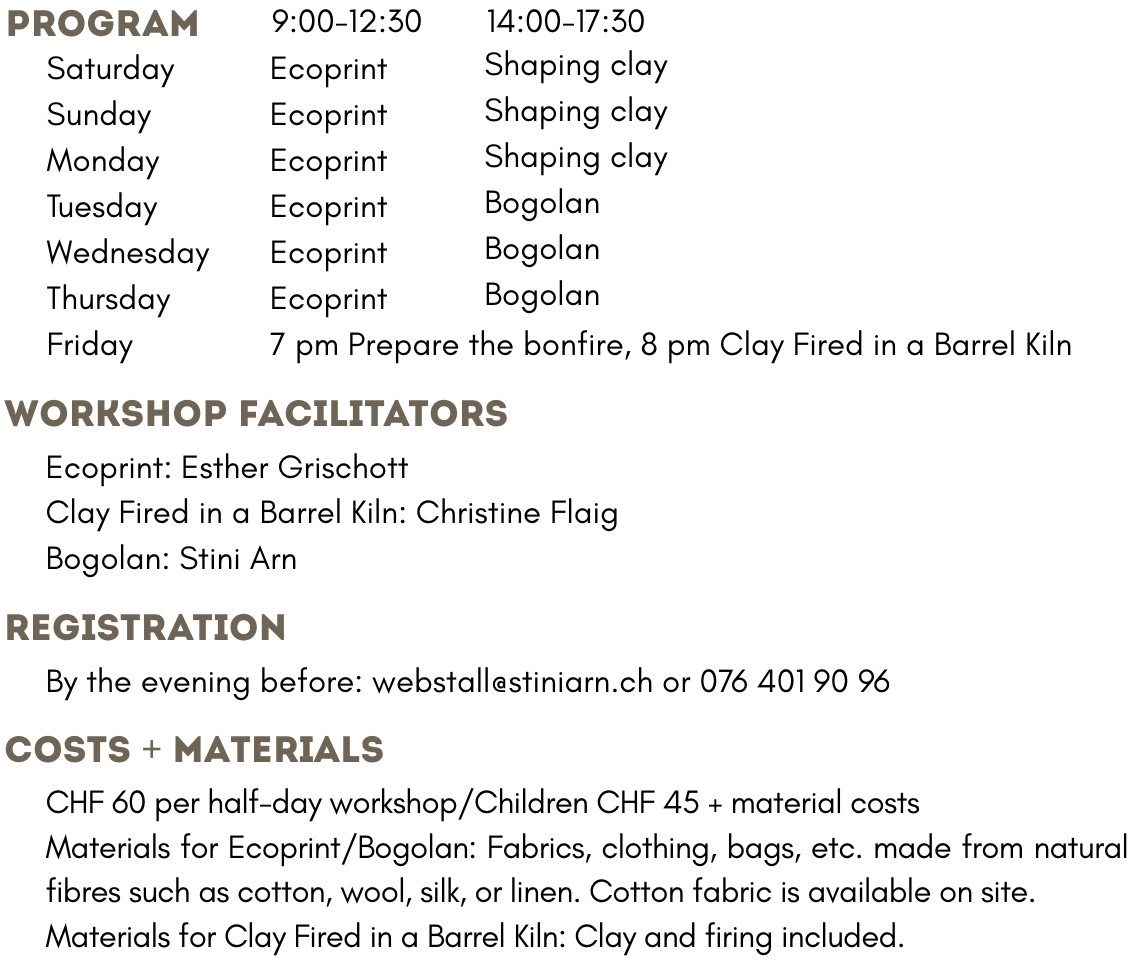
Lunch: Participate in the communal lunch; the kitchen is available, or 10.-/lunch
Accommodations and meals: 35.- per person per night in a shared room; breakfast and dinner 10.- to 15.- per day by arrangement.
Please reserve accommodations well in advance
It is also possible to participate for just one day or half-day.
Registration:
This website uses cookies. Here you can choose which cookies you want to allow and change your selection at any time. By clicking "Accept", you agree to the use of cookies.
Privacy policy